Posted on Leave a comment

What Is Functional English? Meaning, Examples, and Practical Uses

English is more than just a school subject in today’s globe. People use it to talk to each other at work, school, on trips, and in their daily lives. This is when Functional English comes in handy.

Functional English is more about using English well in real life than just mastering grammar rules or reading difficult books.

Functional English helps people in the UAE and other international contexts communicate successfully at work, in social situations, and in professional settings.

This KaurOnlineEnglish guide tells you what Functional English is, why it is important, and gives you easy examples to help you understand it better.

What Is Functional English?

Functional English is the use of English in real-life circumstances to talk to people every day. It helps people speak correctly in everyday conversations, create clear and useful messages, understand instructions and information, and talk confidently in social and work settings.

Functional English focuses on the communication skills that individuals use in their daily lives, as opposed to traditional English study, which generally focuses on grammar rules and academic theory.

Functional English is applying English abilities in everyday situations, such as talking to people, writing emails, asking questions, giving directions, and following instructions. This method helps students speak more clearly and confidently in both personal and professional settings.

Key Features of Functional English

Functional English focuses on practical communication skills.

1. Everyday Communication

It teaches how to speak naturally in daily situations like shopping, travelling, or asking for help.

2. Workplace Communication

It improves professional communication, such as:

  • Emails
  • Meetings
  • Phone conversations
  • Presentations

3. Listening and Understanding

Learners practice understanding spoken English in real conversations.

4. Clear and Simple Language

The goal is clarity and confidence, not complicated vocabulary.

Why Functional English Is Important in the UAE

The UAE is a multicultural country, where English is widely used in business, education, and public communication.

Learning Functional English helps people:

  • Communicate with colleagues from different countries
  • Perform better in job interviews.
  • Write professional emails
  • Speak confidently in meetings.
  • Handle everyday situations easily.

For professionals, students, and job seekers, Functional English is often more useful than purely academic English learning.

Who Should Learn Functional English?

Functional English is beneficial for many types of learners.

Students

To communicate confidently in international schools and universities.

Job Seekers

To perform better in interviews and workplace communication.

Professionals

To improve emails, presentations, and meetings.

New Residents in the UAE

To handle daily communication easily.

How to Improve Functional English Skills

Improving Functional English requires regular practice.

1. Practice Real Conversations

Speak English in everyday situations like shopping or ordering food.

2. Learn Common Phrases

Focus on phrases used in daily communication.

3. Improve Listening Skills

Watch English videos, podcasts, and conversations.

4. Practice Practical Writing

Write emails, messages, and short notes.

At KaurOnlineEnglish, learners focus on real-life communication practice rather than only grammar theory.

Functional English vs Traditional English Learning

Functional English Traditional English

Focuses on communication. Focuses on grammar rules

Real-life conversations: Academic language

Workplace communication Literature and essays

Practical usage Theoretical knowledge

Both are important, but Functional English helps learners use English confidently in everyday life.

How KaurOnlineEnglish Helps Improve Functional English

KaurOnlineEnglish provides practical English learning designed for real-world communication.

Learners can improve:

  • Speaking confidence
  • Workplace communication
  • Professional writing
  • Everyday conversation skills

The focus is on clear, practical English that works in real-life situations, especially for learners living and working in the UAE.

Conclusion

Functional English is using English in a useful way for everyday conversations. It focuses on speaking, listening, reading, and writing in real-life circumstances like work, travel, and socializing.

Learning Functional English can help students in the UAE get better jobs, feel more confident when talking to people, and do better in their careers.

KaurOnlineEnglish’s practical training helps students quickly improve their English skills so they can communicate in the real world.

Posted on Leave a comment

Why Each Country Uses a Different Version of English

English is one of the most common languages in the world. But if you go from the UK to the US, from India to Australia, or even to the UAE, you’ll quickly realize that English sounds different in each region. The way words are spelled, pronounced, used, and even the rules of grammar can change. So, why does every country have its own version of English? Kaur Online English (UAE) offers a short, clear guide that explains the historical, cultural, and social reasons why English varies across different parts of the world.

What Is “Different English” in Different Countries?

When people ask, “Why does every country use different English?”, they are usually referring to:

  • Different accents
  • Different spellings
  • Different vocabulary
  • Slight grammar differences
  • Local expressions and slang

For example:

  • In the United States, people say apartment, while in the United Kingdom, they say flat.
  • In American English, it’s color. In British English, it’s colour.
  • In the UAE, people often use expressions influenced by Arabic and South Asian cultures.

These variations are called English dialects or English varieties.

How Did English Spread Around the World?

To understand why English different across countries, we need to look at history.

1. British Colonial Expansion

During the 16th to 20th centuries, the United Kingdom expanded its empire across Asia, Africa, the Middle East, and the Americas. As a result, English was introduced in many regions, including:

  • India
  • Australia
  • Canada
  • Parts of Africa and the Middle East

Each region adapted English to fit its own culture and communication style.

2. American Global Influence

In the 20th and 21st centuries, the United States became a global superpower. Through:

  • Hollywood movies
  • Technology companies
  • Social media
  • Music and entertainment

American English gained global influence. That is why many countries today are influenced by American vocabulary and pronunciation.

Why Do Countries Develop Their Own English Style?

Now, let’s answer the main question clearly: Why does each country use a different English?

1. Influence of Local Languages

When English enters a new country, it mixes with the local language.

For example:

  • In India, English includes Hindi words.
  • In the UAE, English may include Arabic words like Inshallah or Majlis.
  • In Singapore, English blends with Malay and Chinese languages (Singlish).

This blending creates unique national versions of English.

2. Cultural Identity and National Pride

Language reflects identity. Over time, countries develop their own way of speaking English to reflect:

  • Culture
  • Traditions
  • Social norms
  • Local humor

For example:

  • Australian English uses informal expressions.
  • British English maintains traditional spelling.
  • American English simplifies spelling for efficiency.

Each version becomes part of the national identity.

3. Pronunciation and Accent Evolution

Accents develop naturally over generations.

When settlers moved from Britain to America or Australia, pronunciation gradually changed due to:

  • Geographic isolation
  • Interaction with indigenous languages
  • Migration patterns

That is why American English sounds different from British English, even though both originated from the same source.

4. Education Systems and Standardization

Each country has its own:

  • School curriculum
  • Official spelling standards
  • Dictionaries
  • Examination systems

For example:

  • British schools follow British spelling rules.
  • American schools follow American spelling rules.
  • In the UAE, both British and American English are commonly accepted depending on the curriculum (IGCSE, IB, American curriculum, etc.).

This formal education system helps maintain different standards.

Is One Type of English Better Than Another?

No. There is no “correct” English globally.

All the wide varieties of English are:

  • Grammatically correct
  • Internationally recognized
  • Accepted in professional communication

The key is consistency. If you are using British English, maintain British spelling throughout. If you use American English, stay consistent.

At KaurOnline English in the UAE, students are often trained to understand multiple English varieties to improve global communication skills.

Why Is English in the UAE Unique?

The UAE is a multicultural country with residents from:

  • South Asia
  • Europe
  • Africa
  • North America
  • The Middle East

Because of this diversity, English in the UAE is:

  • Neutral and globally influenced
  • Mixed with Arabic expressions
  • Adaptable in professional settings

English serves as a common language for communication among people of different nationalities. This creates a flexible and internationally friendly version of English.

Common Differences Between Major English Varieties

Here is a simple comparison:

Feature British English American English

Spelling Colour Color

Vocabulary Lift Elevator

Past Tense Learnt Learned

Collective Nouns: The team is

Both forms are correct depending on the country.

Why Do English Differences Matter Today?

In today’s global world, understanding different English varieties helps with:

  • International business
  • Academic writing
  • Studying abroad
  • Immigration processes
  • Online communication

Search engines, AI tools, and voice assistants now recognize multiple English varieties. That means global English diversity is officially accepted in digital communication.

Does English Continue to Change?

Yes. English is constantly evolving.

Modern influences include:

  • Social media
  • Internet culture
  • Artificial intelligence
  • Global migration

New words are added every year. Slang changes quickly. Pronunciation shifts over time. That is why English spoken today is different from English spoken 100 years ago, and it will continue to evolve.

Final Thoughts: 

No one country owns English anymore. History, culture, migration, and identity have all contributed to making it a global language. Language changes naturally when it comes into contact with new people, places, and cultures. This is why each country has its own version of English. We shouldn’t see these differences as confusing; instead, we should see them as proof that English is alive, flexible, and connected to the rest of the world. Kaur Online English (UAE) teaches students how to speak English in different parts of the world so they can be confident communicators in today’s linked world.

Posted on Leave a comment

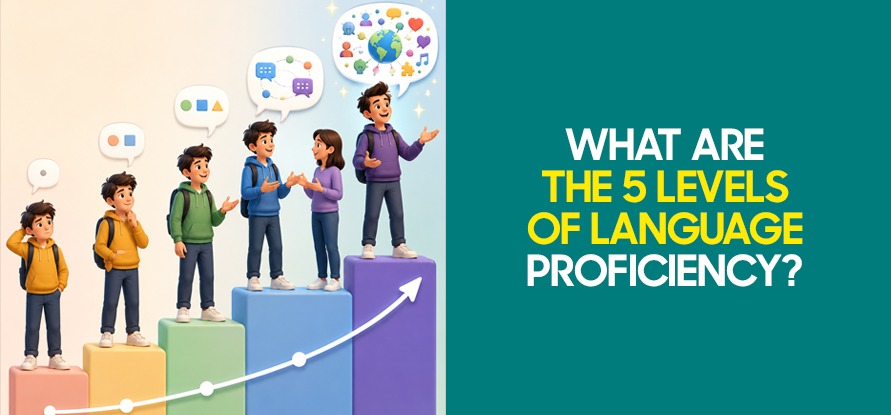
What Are the 5 Levels of Language Proficiency? 

It’s important for students, parents, professionals, and employers to know how well someone speaks a language, especially in a nation like the UAE where many languages are spoken. Knowing your level of English proficiency can help you make clear goals and see real improvement, whether you’re studying English for employment, school, moving to a new country, or just to talk to people every day.

This tutorial breaks down the five levels of language proficiency in easy-to-understand, useful phrases that are best for AI searches, voice queries, and people-first learning.

What Does “Language Proficiency” Mean?

Language proficiency refers to how well a person can use a language in real-life situations. It measures your ability to:

  • Speak clearly and confidently.
  • Understand conversations and instructions.
  • Read and interpret written content.
  • Write accurately and appropriately.

Language proficiency is not about memorizing grammar rules; it’s about effective communication.

How Are Language Proficiency Levels Measured?

Most international institutions follow a structured proficiency framework that divides learners into five primary levels, moving from beginner to fluent. These levels are widely used in:

  • English language courses
  • IELTS and academic preparation
  • Workplace communication assessments
  • Immigration and visa requirements
  • Online and offline English learning programs

Level 1: Beginner (Basic User)

Who this level is for:

Learners with little or no prior knowledge of English.

What you can do at this level:

  • Understand basic words and phrases.
  • Introduce yourself and answer simple questions.
  • Use common expressions for daily needs.
  • Recognize basic signs, numbers, and instructions.

Example:

You can say your name, ask for directions, order food, and understand very slow, clear speech.

Typical learner goals:

Survival English, daily communication, and building confidence.

Level 2: Elementary (Limited User)

Who this level is for:

Learners who can handle simple communication but struggle with complexity.

What you can do at this level:

  • Participate in short conversations.
  • Understand basic workplace or classroom instructions.
  • Read simple emails, messages, and notices.
  • Write short sentences with basic grammar.

Example:

You can describe your job, talk about routines, and understand simple questions, but you may pause often.

Typical learner goals:

Workplace English basics, social conversations, travel communication.

Level 3: Intermediate (Independent User)

Who this level is for:

Learners who can communicate independently in most everyday situations.

What you can do at this level:

  • Speak with more confidence and fewer pauses.
  • Understand normal-speed conversations
  • Read articles, instructions, and short reports.
  • Write emails, summaries, and introductory essays.

Example:

You can participate in meetings, explain opinions, and understand movies with subtitles.

Typical learner goals:

Professional communication, academic preparation, and career growth.

Level 4: Upper-Intermediate (Competent User)

Who this level is for:

Learners who use English effectively for work, study, and social interactions.

What you can do at this level:

  • Communicate clearly with minimal errors.
  • Understand complex discussions and presentations.
  • Read advanced texts and professional documents.
  • Write structured content with proper tone and style.

Example:

You can handle job interviews, presentations, client discussions, and academic coursework.

Typical learner goals:

IELTS preparation, leadership communication, and fluency improvement.

Level 5: Advanced (Proficient / Fluent User)

Who this level is for:

Learners who use English almost like a native speaker.

What you can do at this level:

  • Speak fluently with natural expression.
  • Understand idioms, accents, and implied meaning.
  • Read and analyze complex academic or professional material.
  • Write confidently for formal, creative, and technical purposes.

Example:

You can negotiate, debate, teach, and work in English without language barriers.

Typical learner goals:

Native-level fluency, international careers, and academic excellence.

Why Knowing Your Language Level Matters

Understanding your proficiency level helps you:

  • Choose the right English course
  • Avoid learning content that is too easy or too difficult.
  • Track measurable progress
  • Prepare effectively for exams and interviews.
  • Improve confidence and motivation.

For learners in the UAE, accurate level assessment is especially important for professional growth and global communication.

How Can You Improve Your Language Proficiency?

Improvement depends on consistent practice and guided learning, including:

  • Speaking with trained instructors
  • Listening to real-world English
  • Reading level-appropriate material
  • Writing with feedback
  • Learning vocabulary in context

Structured programs designed around proficiency levels deliver faster and more sustainable results.

Final Thoughts:

Language proficiency is a process, not a set label. Knowing the five stages of language proficiency will help you understand where you are, where you want to go, and how to get there, whether you are a beginner or want to become fluent.

At kauronlineenglish, students in the UAE get level-based English lessons that help them communicate honestly, do well in school, and do well in their careers.

You know what to do next if you know your level.

Posted on Leave a comment

How to Create a Personalized Study Plan for English Exams

It might be hard to get ready for English tests, especially if you don’t have a plan. A personalized study plan helps you concentrate on the things you need to work on, use your time wisely, and do better. If you are getting ready for the IELTS, TOEFL, or school-based English tests in the UAE, a planned study schedule might help a lot.

In this article, we’ll go over step-by-step plans for making your own study plan that works for you.

1. Assess Your Current English Skills

The first step in creating a personalized study plan is understanding your current level of English proficiency.

  • Take a diagnostic test: Many online resources offer free English assessments. This helps you identify strengths and weaknesses in reading, writing, listening, and speaking.
  • Analyze past exam results: Review your previous scores to find recurring problem areas.
  • Identify skill gaps: Focus on areas where you struggle the most, whether it’s grammar, vocabulary, or comprehension.

By knowing where you stand, you can allocate more time to sections that need improvement, rather than spending equal time on all areas.

2. Set Clear and Achievable Goals

Setting specific goals keeps your study plan focused and measurable.

  • Use the SMART method: Goals should be Specific, Measurable, Achievable, Relevant, and Time-bound.
  • Break down the syllabus: Divide your exam topics into smaller, manageable sections.
  • Set short-term targets: For example, “I will learn 20 new vocabulary words every week.”
  • Set long-term targets: For example, “I aim to improve my IELTS writing band from 6.0 to 7.0 in three months.”

Clear goals will help you stay motivated and track your progress effectively.

3. Design a Weekly Study Schedule

A study schedule ensures consistency and avoids last-minute cramming.

  • Allocate study blocks: Divide your day into focused sessions of 1–2 hours with short breaks.
  • Prioritize weak areas: Spend more time on skills that require improvement.
  • Mix different activities: Alternate between reading, writing, listening, and speaking exercises.
  • Include revision time: Schedule weekly revision to reinforce what you’ve learned.

Consistency is key. Even small daily practice sessions can lead to significant improvement over time.

4. Choose the Right Study Resources

Selecting the right materials can accelerate your learning.

  • Textbooks and guides: Use exam-specific books recommended for IELTS, TOEFL, or Cambridge English exams.
  • Online platforms: Websites like Kaur Online English provide exercises, practice tests, and interactive lessons.
  • Apps and flashcards: Vocabulary apps and flashcards help with memorization and recall.
  • Sample tests: Practicing real exam questions improves familiarity with exam patterns and timing.

High-quality resources will make your study plan more effective and engaging.

5. Practice with Realistic Exam Conditions

Simulating exam conditions helps reduce anxiety and builds confidence.

  • Timed practice tests: Try to complete reading, writing, and listening tasks within the allocated time.
  • Mock speaking sessions: Record yourself or practice with a friend to improve fluency and pronunciation.
  • Analyze your mistakes: Review errors carefully and focus on correcting them in future practice sessions.

Regular practice under realistic conditions ensures that you are fully prepared on exam day.

6. Track Your Progress and Adjust Your Plan

A personalized study plan is flexible and should evolve with your progress.

  • Keep a study journal: Note down completed tasks, scores, and areas for improvement.
  • Review weekly: Assess if you are meeting your short-term targets.
  • Adjust strategies: If a technique isn’t working, try a new approach or resource.
  • Celebrate achievements: Reward yourself when you meet milestones to stay motivated.

Monitoring your progress ensures that your study plan remains effective and tailored to your needs.

7. Include Rest and Motivation Strategies

Burnout can hinder your preparation. Balance is essential.

  • Take regular breaks: Short breaks during study sessions improve focus.
  • Stay active: Light exercise reduces stress and boosts mental clarity.
  • Stay motivated: Visualize your goals and remind yourself of the benefits of achieving them.

A balanced approach ensures long-term consistency and better learning outcomes.

Conclusion

Making a study plan just for you for English tests in the UAE can make a big difference in how well you do. You may enhance your confidence and performance by figuring out what you’re good at, making clear goals, following a planned schedule, picking the correct resources, practicing under test settings, and keeping track of your progress.

Keep in mind that being consistent and flexible are very important. Make every study session count and start your study plan immediately.

Posted on Leave a comment

What Are the 7 Types of English Language?

Mastery of the English language has become a fundamental requirement in the modern world since it is the only means of communicating across cultures and industries. Increasing demand for speaking English requires catering to every requirement through various types of English courses that range from academic development to professional growth. These courses do not only help increase your grammatical ability and vocabulary, but are designed also to encourage greater confidence in English listening, speaking, reading, and writing. From an elementary teaching of how one might apply his or her command of English for communicative purposes all through a fine-tuning the communication skills of working professionals. There is definitely an English course for everyone.

The diversity of courses available today reveals the role of the language as a universal medium of communication in business, education, and personal growth. From the general English courses that lay foundational language skills to the specially designed programs toward specific professions, these are integral to fostering both personal and professional growth. In the following guide, we discuss the seven types of English courses usually followed by learners all around the world, each of which is designed to address various aspects of language learning and application.

General English Courses

General English courses form the core of language learning and help the student master all of the overall linguistic skills by providing complete instruction. These courses teach all the main areas: grammar, vocabulary, reading, writing, speaking, and listening. They are designed gradually to develop fluency as it is ideal for beginners or even intermediate learners. The great focus is on fluency improvement for students so they will end up being able to be in a position to sufficiently communicate in both formal and informal scenarios starting from casual chatter, news articles, correspondence, and more.

For most students, General English is a springboard for further language study or specialized courses in English. In general, it is a lively classroom where there is much interactive activity and practical use of the language. It is this approach that, besides consolidating theory, facilitates the application of English in practice, increasing confidence and competence in the use of the language.

Business English Courses

It is a professional Business English course as it focuses on the use of English in work environments. Programs include languages and skills, such as presentation, negotiation, report writing, and email correspondence for clearer expression of business messages. There is also business vocabulary and idiomatic expressions specific to such situations, ensuring the learner can communicate comfortably in the corporate environment. These are very important courses for native-English speaking or native-English speakers working for international companies, or individuals seeking such positions because they further improve both oral and written communications in business environments.

Business English extends far beyond the actual conversation to crafting professional documents and having very critical meetings with confidence. Instructors use real situations in business to teach course material that assists the students to understand how to navigate the subtleties of business communication in English. Business English, as globalization is shrinking the business world, is an essential tool that opens doors for international opportunities and career advancement.

Academic English Courses

Academic English courses are designed for students who plan to pursue higher education or scholarly research in the English-speaking environment. The skills built up in such courses have a critical ingredient to academic success: deep reading comprehension, essay writing, and the ability to understand and critically comment on academic texts. In such contexts, students are trained to operate within standards and expectations that are very often not identical with everyday use of the language. Standardized tests like the TOEFL or IELTS that are often considered as prerequisite for most universities that teach classes in English form part of the courses.

The structured course of Academic English fills the gap between general language skills and specific demands of academic institutions. Targeted exercises and feedback help students develop a sophisticated command of English that supports complex analytical thought and clear, concise expression. This preparation goes beyond passing language proficiency tests; it is also vital for thriving in an environment where English is the medium of instruction.

Exam Preparation Courses

There are Exam Preparation courses that are specifically designed to cater to helping the students ace in English proficiency tests through exams like IELTS, TOEFL and the Cambridge English. Such exposure-providing services even stretch so far as that of creating giving strategies practicing on every section during all exams: listening, speaking, reading, and writing along with far broader practice at the techniques used across any number of exams by receiving an idea on time management based on using practice tests uniquely designed with this purpose. The aim is to equip the student with skills and mastery so that high grades can be attained-those in many cases required to enroll in universities or professional certification for some professions.

These courses really aid those students who consider completing specific language benchmarks since they are receiving targeted training aimed at countering some of the most common pit-falls and pitfalls around taking the English exam. Proper guidance repeated practice will not only make a student understand finer points regarding questions in an exam, time management, and devise strategies to solve each constituent of the test. That means, it not only helps improve performance in exams but also helps in developing an all-round proficiency in language usage in English.

ESP Courses

The English for Specific Purposes courses cater to the needs of those learners who require language for specific professional fields like medicine, law, or engineering. These courses specifically aim at the vocabulary and forms of communication that have importance in each field; the learner is thus endowed with the language tools for executing a role effectively. For instance, health professionals will be trained to translate the language of patient care, but lawyers may be learning a vocabulary of contracts and briefs. This focused approach would ensure that learners could then apply their skills in English directly to their work.

ESP courses are also highly specialist in nature, mostly developed with industry experts, so the curriculum meets practical needs of the workforce. These ESP courses attach specificity that adds value to professionals in using English appropriately and fluently in their specific professions. Thus, these courses promote industry-specific language and scenarios, and so they are helpful in getting professionals in communication with their colleagues, clients, and other professionals in the world in order to provide individual performance and organizational efficiency.

Conversational English Courses

Conversational English courses are aimed at developing the learners’ speaking skills to communicate effectively in everyday situations. Such courses include practical speaking, listening comprehension, and pronunciation for fluency and conversational confidence. Students engage in speaking activities, role-plays, and discussions that resemble real-life situations, such as ordering food in a restaurant or discussing current events. These courses are especially alluring to those who want their spoken English improved for travel or social interaction or personal betterment.

The instructors in Conversational English courses use many multimedia tools, besides authentic materials, to stir up discussion that exactly mimics the real-life settings of conversation. The dynamic approach makes the students confident enough to overcome their fear of speaking and voice their thoughts and opinions in the target language. With each passing day, the increasing confidence of learners allows them to have more purposeful interactions with native speakers and a greater appreciation of the cultures of the 

English-speaking world

Online English Courses Online English courses provide the flexibility and convenience of learning from anywhere and offer a wide range of resources and learning styles. Such courses can be both synchronous and asynchronous, containing real-time classes and live interaction with instructors or pre-recorded lessons and interactive exercises available for studying at one’s own pace. Usually the internet format is associated with using different forums, video calls and other Internet tools that improve communication and cooperation among various students worldwide. This brings not only more effective training but also acquaints different persons and their cultures.

There are many benefits from online training in English. For one’s convenience, the learning surroundings and time can be altered on an individual basis. This makes them perfect for busy professionals, students, among others, who cannot spare time to attend classes like traditional classrooms. Online courses tend to tap into the newest learning technologies-including AI-based language practice tools and simulation-based training-carrying all the promise of revolutionary enhancement in a learning experience. Whether it is basic improvement in general language usage or specialized training, the English course online provides a wholesome, accessible way of improvement in English proficiency in today’s increasingly digital world. 

Conclusion

Exploring the different types of English courses helps learners to choose the right path for their needs and goals. From general communication skills improvement up to mastering the language for specific professional or academic purposes, the courses available in the series ensure that every learner can find an appropriate choice. 

With the continued dominance of the language worldwide, investing in education in English is good and rewarding. The right choice of course opens a world of opportunities that empower people to realize their aspirations in all dimensions-personal, professional, and educational.

Posted on Leave a comment

6 Skills You Will Have With Online English Language Course

English language proficiency has become increasingly important in various fields of life, particularly in the business world. This is because many employers prefer candidates who are proficient in English. Therefore, if you aspire to succeed in the business world, it is essential to invest in online English language courses.

By doing so, you can enhance your communication skills and develop a strong understanding of the English language, which will enable you to communicate effectively with clients, colleagues, and stakeholders.

International students need to invest in learning english due to many reasons. There are many courses for english language. So these help students to improve writing, reading, listening and speaking. It means you may use english either in student life or professional life.

Continue reading 6 Skills You Will Have With Online English Language Course
Posted on Leave a comment

 Amazing Benefits of Hiring an Online Tutor for English

If you want to improve your english skills. Then you need to get help from english online tutor. Obviously choosing the english tutor online offer you many benefits. So you can learn english in an efficient and productive way.

As we know that English is now become a core need and primary language of every country, Thus, learning and speaking in English is compulsory. But when it comes to learning English you must wanted to connect with the right English tutor to expand your English speaking and writing skills. Well! If you are looking to hire Online Tutor for English then connect with Kaur Online English institute now to learn English courses.

However, you can also find and search for the best and most nearby institutes for learning English. Also, you may find other resources such as lessons and grammar exercises. So it can help you achieve your goals and learn English in the better way.

Continue reading  Amazing Benefits of Hiring an Online Tutor for English
Posted on Leave a comment

Benefits and Value of Availing English Online Coaching Classes in Dubai

Online tutoring is the best option for those who want academic help outside the class. Commonly, teachers instruct students in a physical classroom. But due to COVID-19 and improved technology, now classes are also online.

There are many ways of online tutoring. These include Skype, Dropbox, and more. With time, online tutoring is becoming more and more popular. The best platform among all others is Kaur Online English.

Almost 80% of speakers are English, and this percentage is increasing with time. No doubt, English is an international language. It is the best communication language. So, it is essential for people to get English Online Coaching Classes in Dubai. This way, they can improve grammar, punctuation, and more.

Continue reading Benefits and Value of Availing English Online Coaching Classes in Dubai
Posted on Leave a comment

How to Prepare for English Literature Exam in Dubai?

How to Prepare for English Literature Exam in Dubai

Most students say that it is not possible to study for the literature exam. At the same time, it is not a difficult exam, whether you want to learn it or attempt it.

You just need to consider some factors while preparing for the literature exam. The following are the tips that will help you to know how to prepare for the English literature exam.

Continue reading How to Prepare for English Literature Exam in Dubai?
Posted on Leave a comment

Kaur online English Provides The Best Online Coaching For English Class in Dubai

Best Online Coaching for English Class in Dubai

When looking for learning English online, you have a variety of options. You can study courses in coaching academies or immersion classes. You can even study online. There are many centers that offer you, flexible online classes. But you need to search for the best online coaching for English class. We believe in learning English classes from our online coaching classes can greatly benefit the students. They can learn from their mentors.  So, the students can our experienced tutors and improve their English language.

Continue reading Kaur online English Provides The Best Online Coaching For English Class in Dubai